
Steven Arrigg Koh, Sociology Ph.D. Student
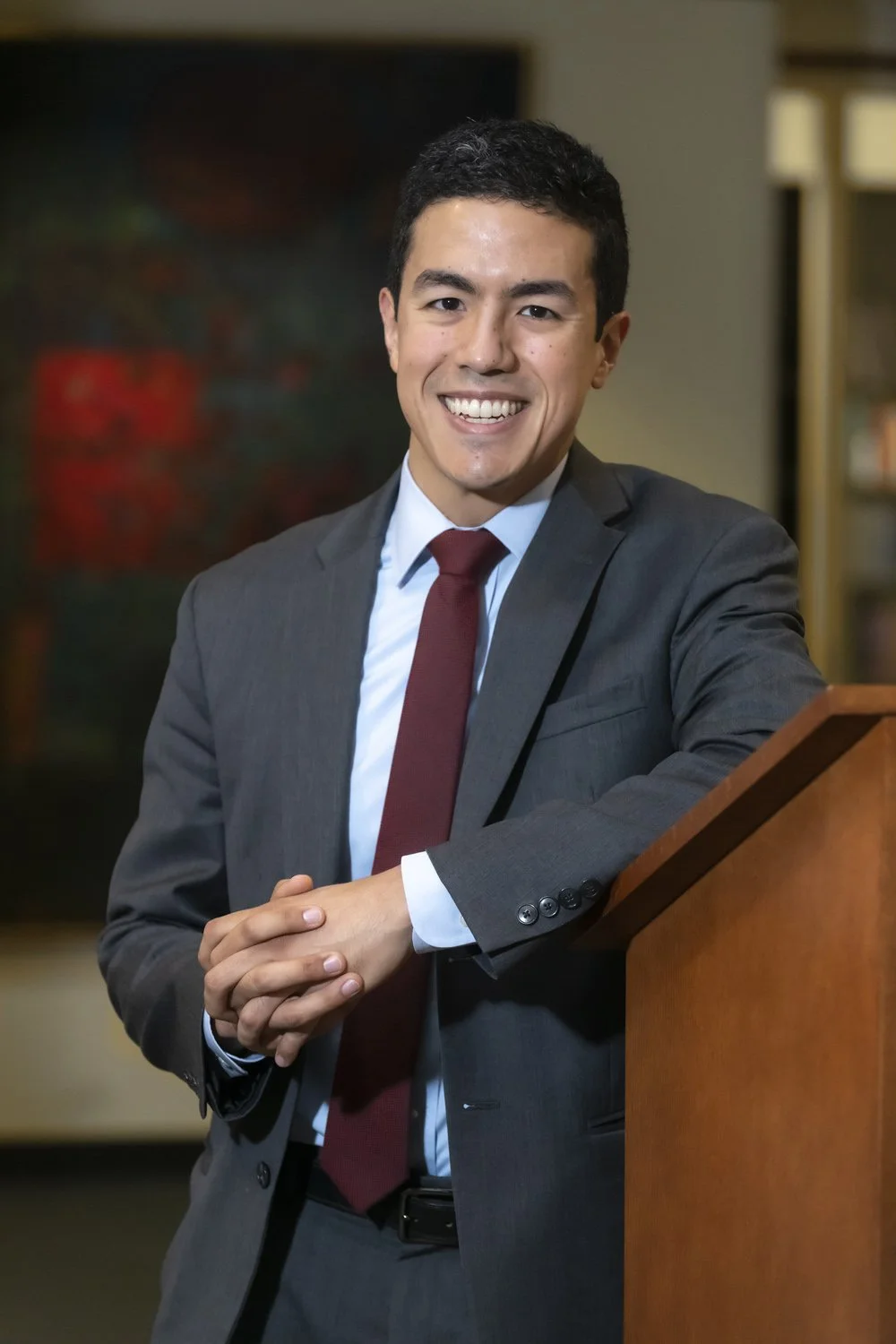
From Courtroom to Classroom: Bridging the Worlds of Law and Sociology
Written by Jenny Jiyoung Bae
Edited by Valentina Zhang
Steven (Steve) Koh’s path to becoming a PhD student in sociology at Yale University has been anything but a straight line. However, despite moving across disciplines, from psychology to law to sociology, Steve has always pursued a single, steady goal: to bridge theory and practice in the pursuit of justice for others.
His academic journey began with a degree in psychology from Harvard College, where he focused on social psychology. While he enjoyed the field, he often felt constrained by the heavy emphasis on experimental methods and positivist assumptions, frequently involving studies with undergraduates in tightly controlled settings. Seeking a broader and more culturally attuned perspective, he headed to the University of Cambridge for a MPhil in social and developmental psychology. There, he expanded his intellectual framework, exploring how the study of social life has evolved in the wake of the cultural turn. He came to embrace the idea that mind and culture are far more entwined than is often acknowledged in mainstream American social psychology.
It was just after his time at Cambridge that Steve made a pivotal shift toward the study of law. Though qualified to pursue a DPhil at Cambridge, he chose instead to attend Cornell Law School. His legal career would involve clerking for a federal judge, working at the International Criminal Court and United Nations in The Hague, and later serving at the U.S. Department of Justice in Washington, D.C. Steve then held a fellowship at Columbia Law School before becoming a tenure track professor at Boston College Law School and then at Boston University School of Law.
As a legal scholar, Steve focused on criminal law, international law, and constitutional law. But even while embedded in legal academia, he continued to reflect on a key question: how can we truly understand law if we ignore its deep entanglement with culture? This marked the moment when his legal research began to converge with the theoretical insights he had developed at Cambridge. It was at this intellectual crossroads that he encountered the work of Yale’s Center for Cultural Sociology (CCS). “The lightning-bolt moment came when I discovered the tradition of cultural sociology here,” he shared. In cultural sociology, Steve found a tradition that treats culture not as a byproduct, but as an autonomous system — one where meaning is patterned, and where symbols, codes, and narratives shape not only social life but the very fabric of democracy.
“The field of sociology is vast, expansive, and therefore powerful,” Steve said with a smile. He praised sociology’s capacity to bring analytical clarity and conceptual depth to virtually any corner of social life. Whether exploring law, politics, medicine, or even Giacometti sculptures and Korean dramas, Steve finds sociological thinking endlessly generative. At Yale, he has found a department that encourages such remarkable breadth, bringing together diverse theoretical traditions and methodological approaches in a way that fosters genuinely interdisciplinary inquiry.
Now as a PhD student in Sociology and Junior Fellow at the CCS, Steve focuses on cultural and comparative-historical sociological approaches to law. His current projects include an article titled “Legal Ideology,” which shows the deep symbolic framework animating legal disagreement, undermining the simplistic claim, “we disagree because the other side is irrational or ideological.” He is also writing about cultural discourse within the U.S. Supreme Court, analyzing how many of the core binaries that shape American civil life—liberty vs. order, individualism vs. community, tradition vs. progress—are mirrored and refracted within the Court’s own reasoning and rhetoric.
Steve’s ultimate goal is to bridge the intellectual gap between law and sociology. Too often, he notes, sociologists analyze society without a firm grasp of legal institutions, while legal scholars engage the law without the benefit of sociological insight or a deeper theoretical understanding of how modern societies function. His interdisciplinary journey is an effort to change that dynamic, bringing the two into richer, more meaningful dialogue in a furtherance of global justice.
At the heart of his academic approach is a deep commitment to both theory and practice. Steve recalls the words of his grandfather, the late Dr. Kwang Lim Koh, a professor of international law: “Theory without practice is as lifeless as practice without theory is thoughtless.” Inspired by that ethos, Steve returned to graduate school to build a stronger foundation in sociological theory and method. Steve also believes, “Over the course of a career, the most compelling scholars resemble artists,” continuously evolving, experimenting across distinct periods, yet always remaining true to the integrity of their own voice. That creative spirit may explain why Steve is also a musician; he plays the guitar and piano, sings, and writes his own songs. In his downtime, he also enjoys reading literature, watching films, and training in Brazilian jiu-jitsu.
When asked what advice he would offer undergraduates considering graduate school, Steve did not hesitate in his advice: “Anything truly worthwhile is bound to be demanding—so don’t shy away from challenges.” He sees difficulty not as a sign of failure, but as an invitation to grow and deepen understanding. “The strongest graduate students are not those who avoid hardship, but those who persist through it without letting self-doubt drown their sense of purpose,” he added. Lastly, he emphasized the importance of leaning on your cohort along the way: “Your peers are a daily source of solidarity, joy, and strength!”