
Milly Yang, Ph.D. Candidate in Sociology
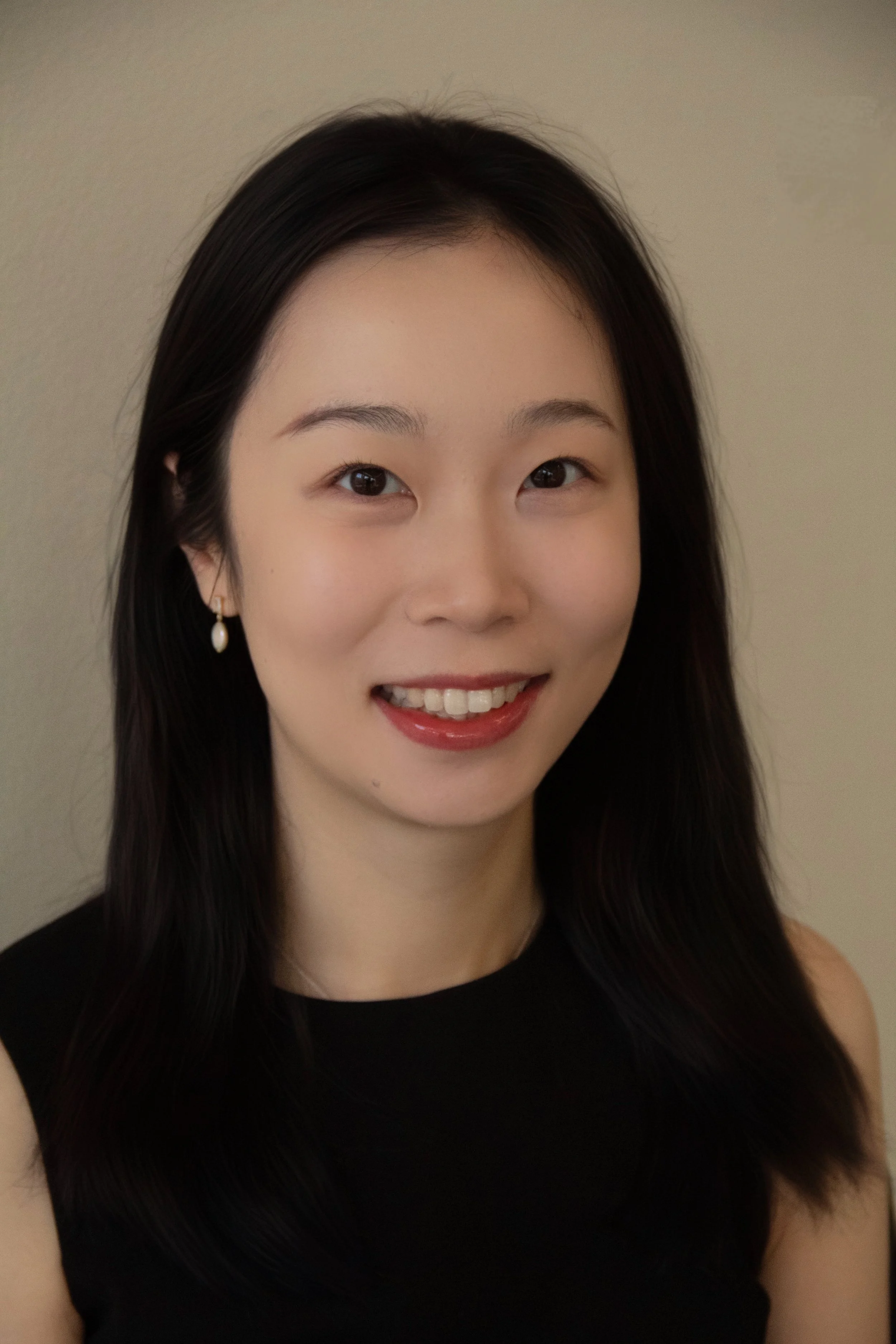
Studying the System that Shaped Her
Written by Valentina Zhang
Edited by Gabriella Nanjo
When Milly first came to America from China for her undergraduate studies, she was excited to explore the new chapter of her life. During her first year at Grinnell College, an introductory sociology class opened an unexpected door. Through the course, Milly had the opportunity to travel to countries like Cuba and Costa Rica to study their healthcare systems. There, she fell in love with sociology. “I felt the real effects of sociology and how structures like our healthcare system appear in real life,” Milly said of her experience.
After completing her B.A. in Sociology and Economics at Grinnell, she now pursues a PhD in Sociology at Yale. Initially, Milly was interested in family dynamics and inequalities within households, something that stuck out to her from her time in China. However, as she spent more time in America, she became more conscious of the different lived experiences of immigrants and non-immigrants. Motivated by her personal experiences and those of the international students around her, she now studies the process of immigration and the lives of high-skilled immigrants in America. She identifies as a social demographer. “I look at how people with different backgrounds experience different things in life,” she says.
In her current research project, Milly critically examines the idea of American dream. She studies the barriers that immigrants in America face and the mechanisms through which highly educated and skilled workers, paradoxically, struggle to achieve deserving outcomes, and why they may be prevented from becoming fully integrated into American society. Milly laid out for me the arduous process of obtaining a green card and hopes to better understand the imbalances of power, difficulties, and long-term effects that this journey has on the millions of immigrants in America.
She has pursued a unique mixed-method project to gather data from various sources to create a comprehensive picture of immigration in America. Currently, she regularly interviews a group of immigrants who have a master’s degree or higher as they navigate the system of finding a job, securing a visa, and transitioning to a green card. Additionally, she collects survey information from a similar demographic of more than 500 people. Lastly, she uses data from the Department of Labor to focus on a group of individuals who have begun their green card application and to track who is more likely to be approved for the green card. So far, her research has shown that the immigration process imposes a large power dynamic between immigrants and the companies that they must appease in order to stay in America, which leads to unfair treatment, discrimination, and inequality.
As a TA of an introductory sociology course, Inequality, Economic Mobility & Public Policy, Milly has come full circle. Through interacting with students, going through class materials, and working with professors, Milly feels that she has learned a lot. She explains that sociology is an intrinsically connected field, and the classes for which she works as a TA help inform her own research. “The legal status, educational outcomes, your parent’s socioeconomic status, and other categorizations are all related to social inequality. Broadening my knowledge overall and teaching this class has definitely expanded my knowledge.” Milly also spoke highly of the professors for the classes that she is a TA for. “By looking at how other sociologists do their work, I learn how they conceptualize the idea of inequality and how they study different social groups. It’s all really helpful.”
Looking into the future, Milly hopes to continue to pursue academic research. She recognizes that as she continues to navigate life as an immigrant herself, her understanding of immigration and her personal experiences will grow concurrently. Nevertheless, she is very excited for the future of her research. Recognizing that there is limited data on immigrants in the U.S. Census, she’s working to collect more long-term data, both through her own studies of cohorts of immigrants and by seeking information on immigrants who currently hold an H-1B visa. She’s found that visa status matters a lot, and hopes to better understand how it could serve as a hidden labor market discriminator.
As someone who found her life path while exploring various academic paths at a liberal arts college, Milly encourages students to take full advantage of their liberal arts education. “A liberal arts college is a very good environment to explore. Explore broadly without deciding anything early on. Try different classes, meet different advisors. It’s really important to be passionate about the things you are doing.”