
Deanna Hausman, 5th Year Ph.D. Student in Microbial Pathogenesis
Microbial Pathways: From Coral Reefs to Human Infection
Written by Ryan Nguyen
Edited by Gabriella Nanjo
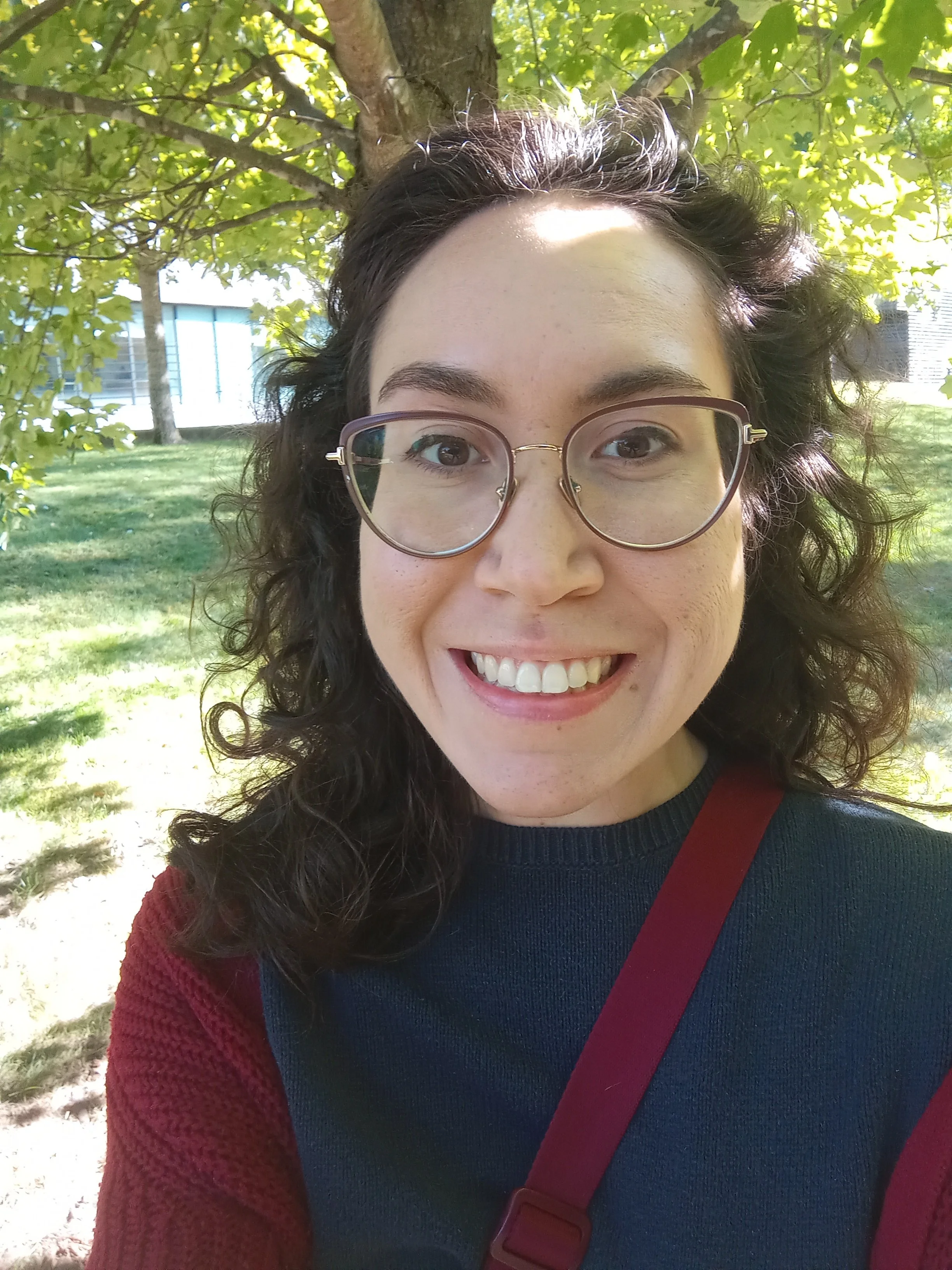
From synthesizing short peptides to cleaning coral tanks, Deanna has had an unusual route to research. As a first-year undergraduate at the University of Texas at Austin, her first lab experience involved synthesizing short peptides that could be utilized as biosensors. However, a pivotal moment in her career as a young scientist combined her interests in molecular biology, life processes, and environmental science.
In a senior-year project, Deanna naturally gravitated toward a coral microbe lab, studying the genetic factors behind how symbiotic microbes can colonize coral and thrive as sea temperatures rise. “I thought it was cool that these organisms could have such a big impact on their host, and I like studying that on a genetic and molecular level to understand how this process was happening and why,” she recalls.
At Yale, Deanna joined the Department of Microbial Pathogenesis as a graduate student, arriving in the Kazmierczak lab to study the “division of labor” associated with bacterial infections. “Everyone was very helpful, and was doing interesting science,” Deanna recounts. In addition to the welcoming lab atmosphere, Deanna recalls that her PI, Dr. Barbara Kazmierczak, was supportive while also scientifically knowledgeable as an academic mentor.
Now, as a 5th-Year PhD Student, Deanna seeks to explore how iron acquisition leads to infection by the opportunistic pathogen Pseudomonas aeruginosa. Her work investigates how environmental iron levels influence P. aeruginosa’s production of siderophores, iron-scavenging molecules that are metabolically costly but essential for host infection. Her findings have highlighted how P. aeruginosa strategically modulates siderophore production under varying iron conditions, balancing metabolic costs against survival needs.
After graduating from Yale, she hopes to continue research, preferably in a medical or university setting. “My experience has really given me a perspective on my work from a medical standpoint, and as my PI is an MD, we’re always kind of thinking about how the questions I’m investigating might be relevant in an infection,” Deanna says.
Beyond the bench, Deanna is highly involved in the Graduate Student Assembly (GSA) as a departmental representative. She enjoys advocating for changes that affect the entire graduate student body, alongside meeting fellow students. Deanna also enjoys ballet. Deanna advises young scientists to be curious and optimistic. “Being an undergraduate student is an amazing opportunity to go anywhere and do anything, since you are just starting,” she suggests. Seeking out a variety of perspectives and engaging with scientific literature was very helpful in her early career as a scientist.
In the future, Deanna is intent on continuing translational research in microbiology. Her experiences from peptide synthesis to coral microbe symbiosis, and to her PhD project on iron acquisition have helped develop her love of biology, and specifically, microbes.