
Natalie Hernandez, 5th Year Ph.D. Candidate in Political Science
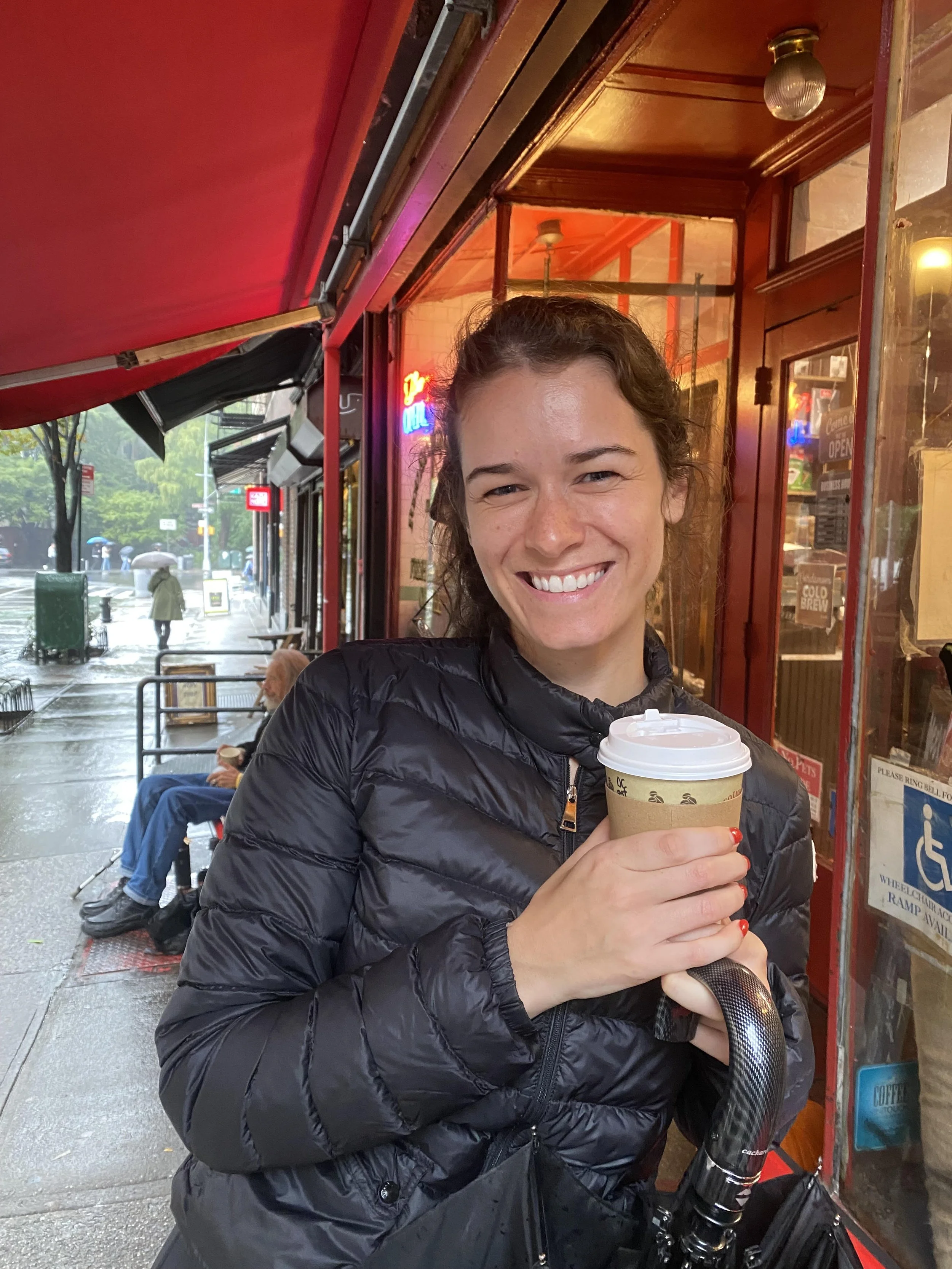
Studying Belief, Finding Purpose
Written by Katie Marchand
Edited by Gabriella Nanjo
Natalie Hernandez, a fifth-year Ph.D. candidate in Yale’s Political Science department, radiates both passion and purpose. Throughout the interview, her spirit was nothing short of inspiring. She recalled being drawn to the program because it “sounded like a dream,” and described her daily life now as “the good life.”
Natalie has been a formidable force in the field, publishing three papers in recent months. Her path to academia wasn’t linear. After graduating from the University of Pennsylvania, she spent several years at the Boston Consulting Group (BCG) before deciding to pursue work that felt more aligned with her passions.
Staying in touch with one of her undergraduate professors, Dr. Dawn Teele, proved pivotal. Dr. Teele encouraged her to pursue a Ph.D. and suggested Yale, her own alma mater. Following in her mentor’s footsteps, Natalie started at Yale in Fall 2020 and has since worked closely with Yale’s Greg Huber and Josh Kalla (as well as remaining close to Dr. Teele!). Natalie has focused her research on American politics, specifically public opinion and abortion.
Her paper “Abortion Policy Preferences are Structured, Stable, and Consequential”, which is forthcoming in the American Journal of Political Science, challenges a foundational claim in political science made by Converse’s (1964) seminal work, “The Nature of Belief Systems in Mass Publics”, which argued that most people lack meaningful preferences on policies. In this paper, Natalie and her co-authors, Greg Huber, Alan Gerber, and Mackenzie Lockhart, use original data from 130,000 Americans to examine abortion preferences. They find that these attitudes are as stable as the Big Five personality traits, predict changes in vote choice, and are structured similarly across individuals. These findings suggest a more structured belief system than previously assumed.
Her second paper, “Targeted Abortion Frames Do Not Mobilize Political Action-Taking”, turns to the strategies of pro-choice organizations and how they attempt to mobilize support through strategic messaging. For this project, Natalie and co-authors Nick Ottone and Josh Kalla first interviewed leaders at these organizations to explore efforts to engage non-traditional supporters, such as men or religious communities. Then, they explored whether these strategies worked in the real world through an online field experiment and two survey experiments. They found that these efforts did not lead to increased engagement amongst the targeted groups, nor did they trigger backlash among existing supporters who did not identify as part of these groups.
Her third recent study, “The Insurance Value of Abortion and Support for Reproductive Rights”, explores the insurance value of abortion access, using panel data from Harvard’s Cooperative Congressional Election Study (CCES) database. In this project, Natalie and her co-authors, Sam Zacher and Alexander Trubowitz, argue that some people view access to abortion as a form of insurance against the costs of an unplanned pregnancy. But for those who feel morally conflicted about abortion, that calculus can shift after becoming parents. They find that these “cross-pressured” individuals, who tend to be religious and conservative, become less supportive after having their first child.
Next, Natalie is working on a project to understand how state-level public opinion aligns with state-level abortion laws in the post-Roe era. Looking ahead, Ms. Hernandez will be on the academic job market this fall in pursuit of an assistant professorship. She already has valuable teaching experience at Yale, having served as a TA in courses such as Women, Politics and Policy, Applied Quantitative Research Design, and The Politics of American Public Policy.
Ms. Hernandez’s love for her work is genuine and palpable. When asked for advice, she didn’t hesitate:
“Find something you’re really passionate about and, of course, take statistics.”