
Shahribonu Azamatova, Pauli Murray ‘25
Lab by Lab: Catalyzing a Future in Energy Research
Written by Sundeep Kaur
Edited by Gabriella Nanjo
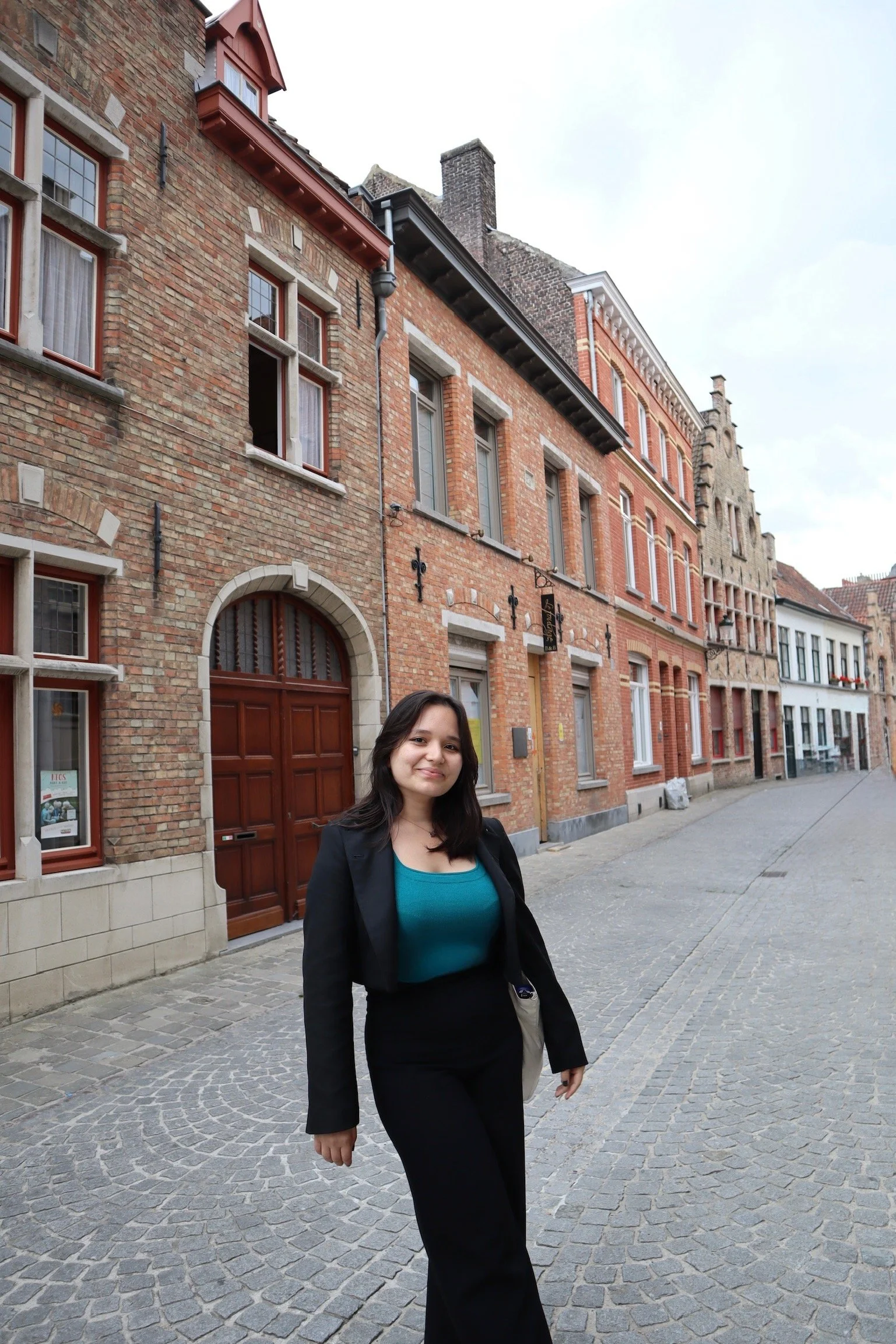
Shahribonu Azamatova, known to most as Sherrie, is a senior in Pauli Murray College, majoring in Chemical Engineering with an Energy Studies Certificate. She has always been curious about how things work and how to improve them. Raised in Brooklyn, New York, with roots in Central Asia, she speaks eight languages and lights up when talking about ancient myths and YouTube history essays. Yet, when she talks about renewable energy research, her voice takes on a quiet determination.
At Yale, Sherrie began searching for ways to connect her passion for science to real-world applications. She started as a biomedical engineering major, but by sophomore year, she found herself drawn to chemical engineering. “It just had more applications. It made more sense for the kind of impact I wanted to have,” she explains. That same year, she joined ChemE Car, a student organization that builds and powers model cars using chemical reactions. The hands-on challenge of applying classroom knowledge to something tangible was energizing. “It was my first time creating something from scratch and watching it work,” she said.
“The trial and error, the collaboration, I loved all of it.”
Sherrie found her first research position through Yale’s departmental database, joining a lab focused on neurodegenerative diseases. There, she conducted computational studies of isotopes used in PET scans for the diagnosis of Parkinson’s and Alzheimer’s diseases. While this experience wasn’t hands-on, it clarified her priorities: mentorship, collaboration, and learning through direct experimentation.
Her next opportunity was international. The summer after her sophomore year, Sherrie traveled to Belgium through the Tetelman Fellowship to work at UCLouvain. In a small lab with no postdocs, she found herself leading catalyst testing for methane reforming and hydrogen production. She operated a small reactor, conducted spectroscopy methods, and completed a full project independently.
Returning to campus more certain than ever that she wanted to work in energy, Sherrie joined Professor Pfefferle’s lab, where she focused on nanoscroll synthesis and its applications in energy storage. It was a crash course in nanoparticles, spectroscopy, and the kind of lab culture that could make or break an experience. Her postdoc mentor taught her synthesis techniques and deepened her understanding of nanoscale processes that power modern energy research.
Now, as a senior, Sherrie works in the Winter Lab, her favorite so far. There, she investigates catalysts for CO₂ conversion, analyzing gas-phase products using gas chromatography and exploring ways to make carbon capture more efficient. The Winter Lab, she says, confirmed her decision to pursue graduate school in energy research.
Each lab experience taught Sherrie something different, not just about catalysis or energy research, but about the kind of researcher she wanted to become. Starting with no lab experience before college, she built her skills through persistence, openness to new challenges, and a willingness to learn from both successes and setbacks. Over time, she discovered how important it was to find a supportive environment, advocate for her own needs, and seek mentors who encouraged growth.
For students just beginning their research journeys, Sherrie’s path offers a valuable reminder that exploration matters. Stepping into new spaces, whether student organizations, interdisciplinary classes, or unfamiliar labs, can open doors to opportunities that shape both academic and personal growth. Research, she has found, is rarely a straight line. It is built through curiosity, community, and the patience to figure things out, one experiment at a time. Her dedication to research is matched only by her generosity as a mentor and friend, something I feel grateful to have experienced firsthand.